
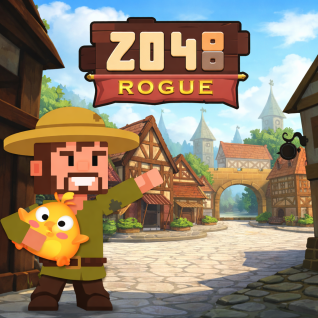





2048 Rogue
What is 2048 Rogue?
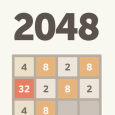
2048 Rogue is a puzzle game that blends classic 2048 tile merging with roguelike-style strategic gameplay and progression. Unlike traditional 2048 games where every run feels identical, here each session changes based on progression choices, making every run more tactical and less predictable.
Unlike many standard 2048 puzzle games, this version adds risk-reward decision-making, forcing players to think not only about tile merging but also survival and long-term board control.
How to Play
Objective: Merge tiles to reach higher numbers while surviving longer runs.
Controls: Use arrow keys (or swipe on mobile) to move tiles.
Gameplay loop: Move → Merge tiles → Manage board space → Adapt to random roguelike events.
The core challenge is not just making big numbers, but keeping the board from filling up too quickly while adapting to unpredictable changes.
Tips & Strategy
Here are real gameplay-tested tips that help you survive longer runs:
1. Always keep one “escape lane”
Don’t block all directions. Leave at least one side of the board flexible so you can recover when RNG spawns bad tiles.
2. Build in a corner (but not blindly)
Corner stacking is strong, but in 2048 Rogue, over-committing too early can trap you when roguelike effects shift tile flow.
3. Don’t chase big numbers too early
Many players lose because they rush high tiles (512+). Focus on board stability first, then scale up.
4. Plan two moves, not one
Because of roguelike randomness, reactive play fails fast. Always think: “If I move here, what happens after the next spawn?”
5. Reset bad boards early
A common mistake is trying to “save” a dead board. In this game, restarting early is often better than forcing a doomed run.
Why 2048 Rogue Feels Different
More strategic than classic 2048
Adds roguelike unpredictability
Every run feels slightly different
Requires both logic and adaptability
Compared to standard 2048 games, 2048 Rogue is less about memorized patterns and more about dynamic decision-making under pressure.
Experience
After multiple runs, the biggest difference I noticed is how quickly the game punishes poor board management. In classic 2048, you can recover from mistakes. In 2048 Rogue, one bad sequence can collapse the entire run.
The most satisfying moment is when a carefully controlled board suddenly chains merges into a huge tile—especially after surviving several chaotic turns.
However, the game can feel punishing for beginners because RNG events sometimes disrupt optimal setups. That’s part of the roguelike identity, but it also makes consistency harder compared to traditional 2048.
Hardest Challenges
Surviving mid-game board congestion
Handling unlucky tile spawns
Avoiding corner lock situations
Recovering after forced merges